A green card through a U.S. job. EB‑3 explained simply
EB-3 lets a U.S. employer sponsor you for permanent residence. No investment and, in many cases, no college degree. Here is how it really works, how long it takes and what it costs.
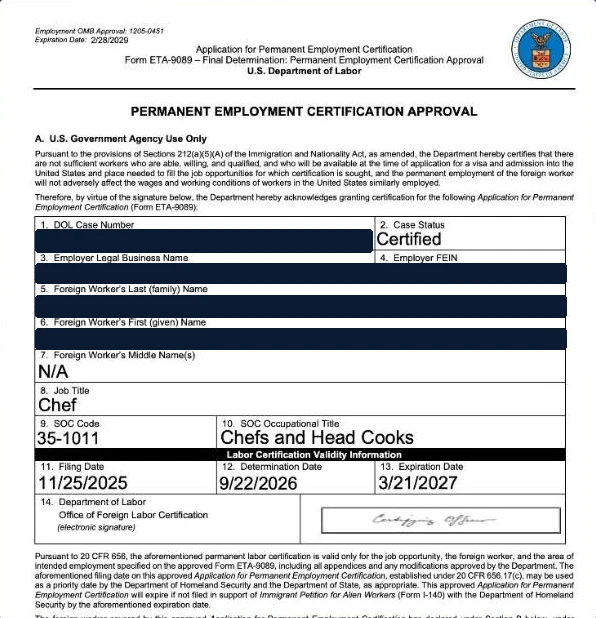
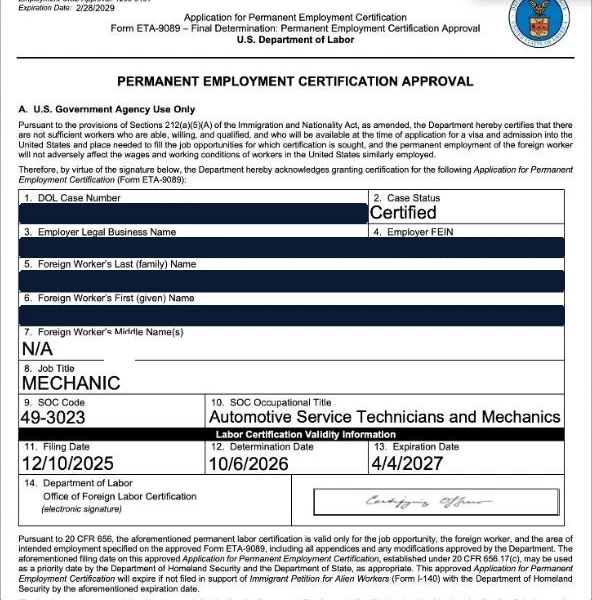
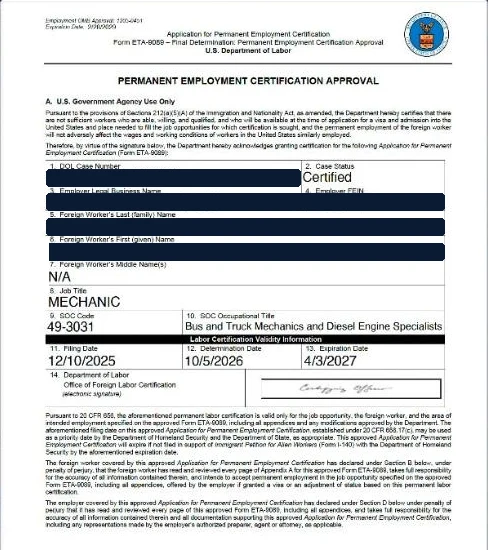 CERTIFIEDOur EB-3 approvals in 2026Truck mechanics, chefs, a cashier, a nanny. Real documents.See our cases

What is EB-3
Three ways in. One green card.
EB-3 is the third employment-based immigrant category. A U.S. employer offers you a permanent, full-time job, proves no qualified U.S. worker is available, and petitions for you. When your place in line comes up, you and your family receive green cards.
Skilled workers
Jobs that need at least 2 years of training or experience: electricians, welders, cooks, mechanics, nurses' aides with training and many more.
Professionals
Jobs that require a U.S. bachelor's degree or a foreign equivalent: accountants, engineers, teachers, registered nurses, IT specialists.
Other workers
Jobs that need less than 2 years of training: warehouse, hospitality, meat processing, cleaning, caregiving. No degree required, but the line is usually longer.
Free consultation FREE
A Skylex Immigration Lawyer attorney checks which EB-3 subcategory fits you, right in the Skylex app.

Skylex Immigration Lawyer
Skylex handles your case from start to finish
EB-3 Path is a guide by Skylex Immigration Lawyer PLLC. Our team prepares PERM, I-140 and the green card step for employers and workers across the U.S.
Who qualifies
What you need before you start
Four things decide whether EB-3 works for you. Check them before you sign anything.
Visa Bulletin, November 2026: EB-3 final action dates
Most countries & Mexico
If your priority date is earlier than the date in your column, your case can be approved. Dates change every month.
The process
Six steps from job offer to green card
Prevailing wage
The employer asks the Department of Labor (DOL) what the minimum wage for this job and area is (form ETA-9141).
Recruitment
The employer advertises the job in the U.S. for about 30–60 days to test the labor market.
PERM application
If no qualified U.S. worker applies, the employer files the PERM (ETA-9089). Its filing date becomes your priority date, your place in line.
Form I-140
After PERM approval, the employer files the immigrant petition with USCIS. Premium processing can speed up this step only.
Wait for your date
Each month the State Department publishes the Visa Bulletin. When your priority date is current, you can take the final step.
Green card
Inside the U.S., file I-485 (adjustment of status) and get a work permit while it is pending. Abroad, finish at a U.S. consulate with DS-260.
Time & cost
How long it takes and what it costs
$715 petition + $600 Asylum Program Fee. Usually paid by the employer.
- I-140 petition — $715 (paper) / $665 (online)
- Asylum Program Fee with I-140 — $600, $300 for small employers, $0 for nonprofits
- Premium processing (optional) — $2,965
- I-485 per person — $1,440
Realistic timeline (late 2026)
- Prevailing wage — 3–6 months
- Recruitment — 2–3 months
- PERM review by DOL — about 10–14 months, more with an audit
- I-140 — 15 business days with premium, months without
- Visa Bulletin wait — depends on country and category
- I-485 / consulate — about 6–18 months
By law the employer pays for PERM: the attorney fees and the job ads. A worker cannot be charged for them. Medical exam, translations and the lawyer for the green card step are separate.
Be careful
Red flags people fall for
“Pay us $20,000 for an EB-3 job”
Selling a job offer or charging you for PERM is illegal. Recruitment agency fees are a separate question: get every contract reviewed.
“Guaranteed green card in 12 months”
No one controls DOL, USCIS or the Visa Bulletin. Honest timelines are ranges.
Working for the sponsor before approval
If you are not authorized to work, starting the job early can hurt your case.
Changing jobs at the wrong time
You can switch employers only at certain stages, such as after I-485 has been pending for 180 days. Leave too early and you may start over.
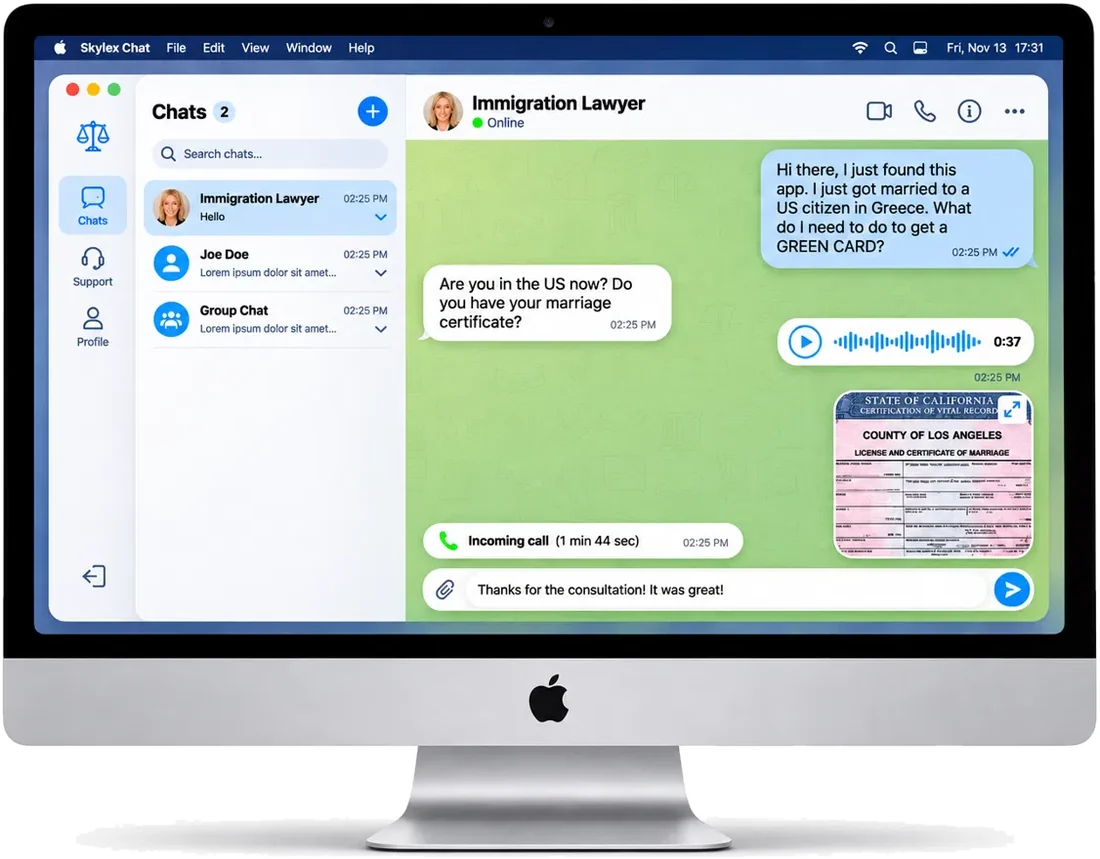
Skylex app
A lawyer in your pocket
Chat, voice messages, document photos and calls with an immigration lawyer. Track your case from your phone or computer.
FAQ
Questions people ask us most
Do I need a college degree for EB-3?
No, not for every EB-3 subcategory. Skilled workers need 2 years of training or experience, and other workers need less than that. Only the Professionals subcategory requires a bachelor's degree or a foreign equivalent.
Do I need to speak English?
There is no English test for EB-3. The employer may require English for the job, and you will need basic English later for citizenship.
Can my spouse and children get green cards too?
Yes. Your spouse and unmarried children under 21 receive green cards as derivative family members, in the same case.
Can I apply from outside the U.S.?
Yes. Many EB-3 workers go through consular processing: the employer sponsors you from abroad and you enter the U.S. already holding a green card.
I'm already in the U.S. Can I file EB-3?
Often yes, if you are in lawful status. Gaps in status, overstays or unauthorized work can make adjustment inside the U.S. impossible, though section 245(k) forgives up to 180 days in some cases. Have a lawyer check your history before anything is filed.
Can I use EB-3 if I have a pending asylum case or TPS?
Sometimes. It depends on how you entered, your status history and your current status. This is very individual: book a consultation.
Free immigration consultation
Not sure if EB-3 fits you? Book a free consultation with Skylex Immigration Lawyer in the Skylex app.